
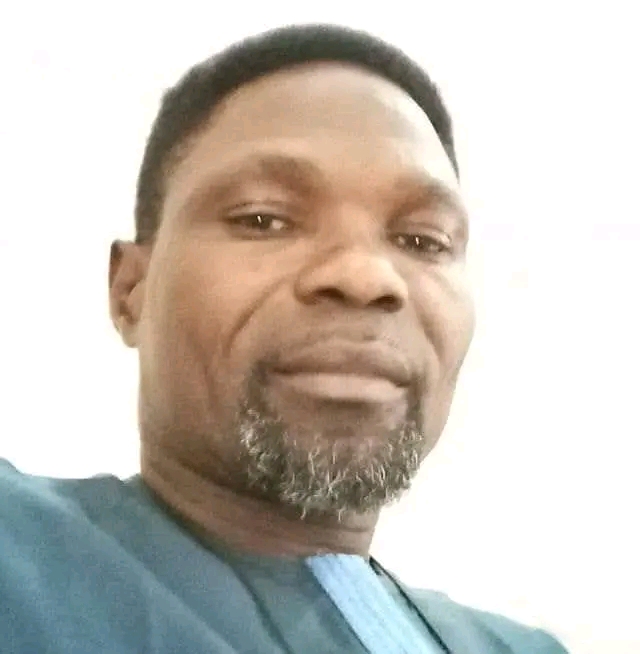
By Abdul Lauya
My medical crisis began with a sharp cranky sound in my lower back that I ignored for months until the pain escalated and slowly confined me to my bed.
I was later diagnosed with Cauda Equina Syndrome, a rare but dangerous spinal emergency caused by severe compression of the nerves responsible for leg movement, bladder, bowel, and sexual function.
The journey to the theatre began with investigations at Army/NAOWA Hospital Asokoro, where X-ray and later MRI scan results revealed “Disc Degeneration and Severe Nerve Compression.” I spent two weeks there on conservative treatment, enduring pains.
For lack of SOPD-Neurology at NAOWA, I was referred first to the National Hospital Abuja for expert management, where we were informed that government-employed doctors were on strike, and then to Garki Hospital, a PPP facility operating under private management.
On arrival at Garki Hospital, the neurosurgeon immediately noticed my severe limp and extreme pain in the Emergency Unit. Without even reviewing my MRI results, he booked me for emergency lumbar decompression surgery and instructed me to source funds within 48–72 hours.
When the Consultant Neurologist explained to me the severity of my condition, including the risk of loss of urine and bowel control, impotence, and permanent paralysis, I understood for the first time that I was in genuine danger.
Throughout my two-week admission at NAOWA Hospital, I trivialized the sickness, continued publishing stories for Eye Reporters, sharing updates on social media, and remaining active despite the pain, which is why many did not believe I was that seriously ill.
When I got to Garki Hospital, I had only ₦500,000 in my account, believing that I might even return with some change after the surgery
Doctors warned that without emergency lumbar decompression surgery, I risked irreversible nerve damage, and urged me to raise ₦5.7 million almost immediately.
The breakdown: Surgery implant, ₦2.5m; Cost of surgery, ₦1.8m; Bed space, ₦500k; Cost of medication, ₦300k; Physiotherapy, ₦300k; and lab investigation, ₦300k.
The outrageous total surgery cost shut me down throughout the 72-hour ultimatum, an amount that even my entire village may not be able to raise within the short time frame.
As a PhD candidate at the Federal University Lokoja studying Legislative Studies alongside colleagues from over ten interdisciplinary programs, I reached out to our Course Governor, Elder Barr Ade Ajanaku.
Barr Ajanaku immediately took my plight to our general PhD WhatsApp platform of over 100 scholars across Legislative Studies, Public Sector Management, Parliamentary Administration, Election and Party Politics, Security and Strategic Studies, Leadership and Development Studies, Peace, Conflict and Security Studies, Border and Migration Studies, and others.
PhD candidates represent the highest and most elite academic qualifications. They are critical thinkers and problem solvers expected to provide solutions to socioeconomic, security, and political challenges. Because of their erudition, they transcend ethnic, religious, or regional affiliation.
When they meet in programs like this, they see each other as indivisible individuals, not as Kanuris, Hausa, Yoruba, Ibibio, Igbo, Igala, Idoma, Fulani, Efik, Dadiya, Berom, or Jarawa, but as Nigerians first.
By solving societal problems, PhD holders should also solve life-threatening problems faced by colleagues. We are in an era where knowledge must translate to human value, compassion, and action.
This is why my PhD colleagues, as they have done in many previous interventions involving colleagues in bereavement or crises, came through for me.
In an extraordinary display of solidarity, my colleagues rallied around me, coordinating donations, mobilizing support, and amplifying the urgency of my case far beyond academic boundaries.
Many of the most significant donations (most of which are anonymous) came from students in other programs, some of whom I don’t know personally, proving the strength of cross-disciplinary friendships nurtured during combined courses like Research Methods.
Special thanks to our most compassionate Course Governor, Elder Barr Ade Ajanaku, the PhD Course 2 Elders Forum, Samari TJ (Class Rep, PhD Public Sector Management), Collette Davidson, author of the award-winning book My Father’s Sperm (PhD Public Sector Management), Christabel Uzoegbo (Public Sector Management), Vivian Idepefo (PhD Legislative Studies), and Precious Ejekkwu (PhD Legislative Studies).
Others include: Amb. Godwin Ehochi (Class Rep, PhD Legislative Studies), ACP Dolapo Badmos, currently serving at the UN HQ New York as the first female Police Envoy (PhD Public Sector Management), Aliyu Mohammad (PhD Peace & Conflict Studies), Ignatius Nkwoh (PhD Legislative Studies), and many too numerous to mention.
Support also came from friends and seniors in my military and media networks, including Air Vice Marshal Abubakar Adamu (Chairman, Military Pensions Board), Rear Admiral Ayuba Chugali (rtd), Rear Admiral Kasim Bushi (Former Chief of Accounts & Budget, Nigerian Navy), Rear Admiral Jamila Malafa (rtd) and Pastor James Obilikwu.
Others are: Senator (Col) B.K. Amos, Rear Admiral Suleiman Dahun, Commodore B.U. Quadri (Immediate Past Director Navy at Military Pensions Board), Ms. Grace Morenike Henry, Chairman Nigerian Legion, Col. Funmilayo, Mrs. Roseline John-Uduone, Navy Capt. Chinwe Florence Umar, Lt. Col. Yunana Andrew, Barr. Linus Befiyo PhD, Navy Capt. Chris Anushiem (rtd), Chief Barr. Eli J. Gamaliel, and many others.
These contributions from my PhD colleagues, combined with the compassion of people from both civilian and military communities, serving and retired made my emergency surgery possible and ultimately saved my life.
On 14 November 2025, a date that will forever stand as a landmark in my life, neurosurgeons removed the collapsed disc crushing my spinal nerves and inserted implants to stabilize my spine.
A few days after the lumbar decompression procedure, my bladder, bowel, and sexual function returned, a sign that the nerves had been rescued in time.
My recovery continues with pain relievers, pregabalin, cocodamol, antibiotics, lumbar corset support, walking aids like the Zeemax Wheel, hydration, fruit therapy, and physiotherapy as my right leg slowly relearns trust and balance.
The lingering pain and gradual restoration of nerve function are reminders that healing from Cauda Equina Syndrome takes time, patience, and courage in equal measure.
Reflecting on the ordeal, I now understand how easily we dismiss early warning signs, especially some of us conditioned by military training to endure pain without complaint.
That cranky sound I ignored for many months was the beginning of a potentially life-altering crisis, and my survival depended on timely diagnosis, swift intervention, and the goodwill of people who believed my life mattered.
This experience taught me the true value of community. My PhD colleagues, friends, and well-wishers didn’t just provide financial support, they saved my life, proving that networks of trust matter far more than numbers and contacts in a phonebook or on social media.
This ordeal also opened my eyes to a painful hypocrisy deeply rooted in our society where people often withhold help when it matters most.
Many Nigerians die in hospital beds for lack of ₦50,000 or ₦100,000, yet when the same person dies, relatives and friends suddenly find millions for an elaborate funeral.
I have seen situations where one individual singlehandedly bankrolls a burial with ₦5 million or ₦10 million, but that same person could not release ₦100,000 to save the life of the deceased when it mattered. It is a tragic social contradiction, one that exposes how we often value ceremonies over human life.
My case would have been no different if my PhD colleagues had not acted swiftly; I could easily have become another name mourned with grandeur instead of a life preserved with compassion.
If sharing my story alerts even one person in sickness to take early warnings seriously, nurture good circle of friends, and genuine relationships, then this ordeal will have meaning.
Cauda Equina Syndrome may be rare, but the injuries that cause it are common, and timely intervention can make all the difference.
For advert placement and inquiries, publication of press releases, and news coverages, please call: Phone: 08052898434 Email: editor@eyereporters.com, click here to view the advert rates.
